
Herpetic Whitlow (HW) is a Herpes Simplex infection that involves the fingers, usually in children or health care workers. The lesions begin with tenderness and erythema, usually of the lateral nailfold or on the palmar regions. Deep-seated blisters develop within 24-48 hours of onset of symptoms. The blisters may be tiny or deep-seated larger blisters (bullae) that may be mistaken for a paronychia infection. The lesions may progress to frank erosions or may heal without ever impairing the skin due to the thicker stratum corneum.
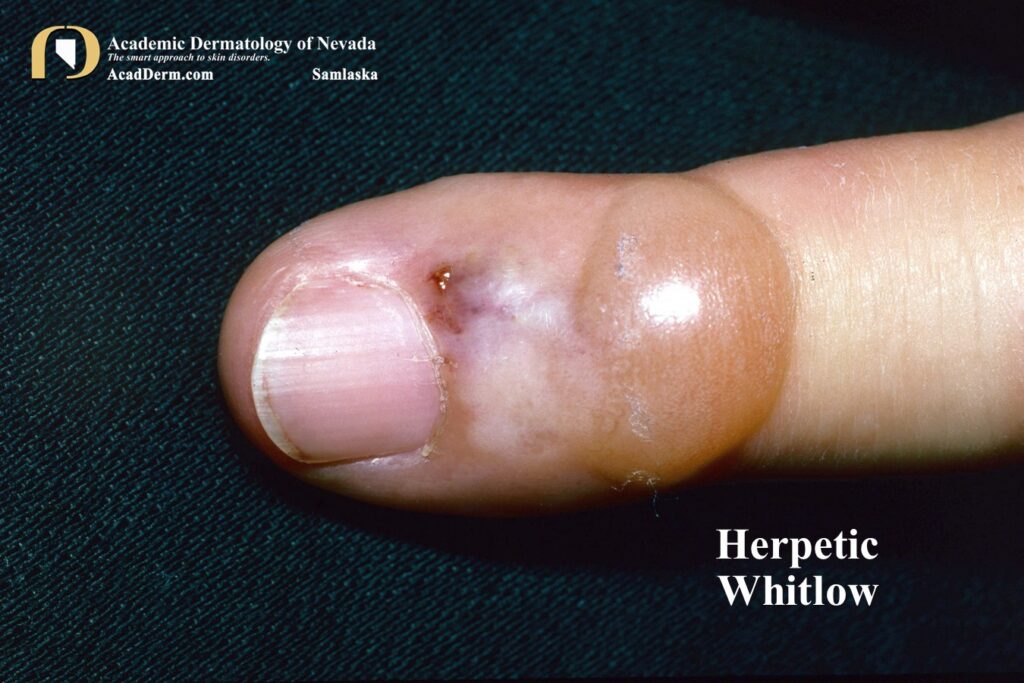
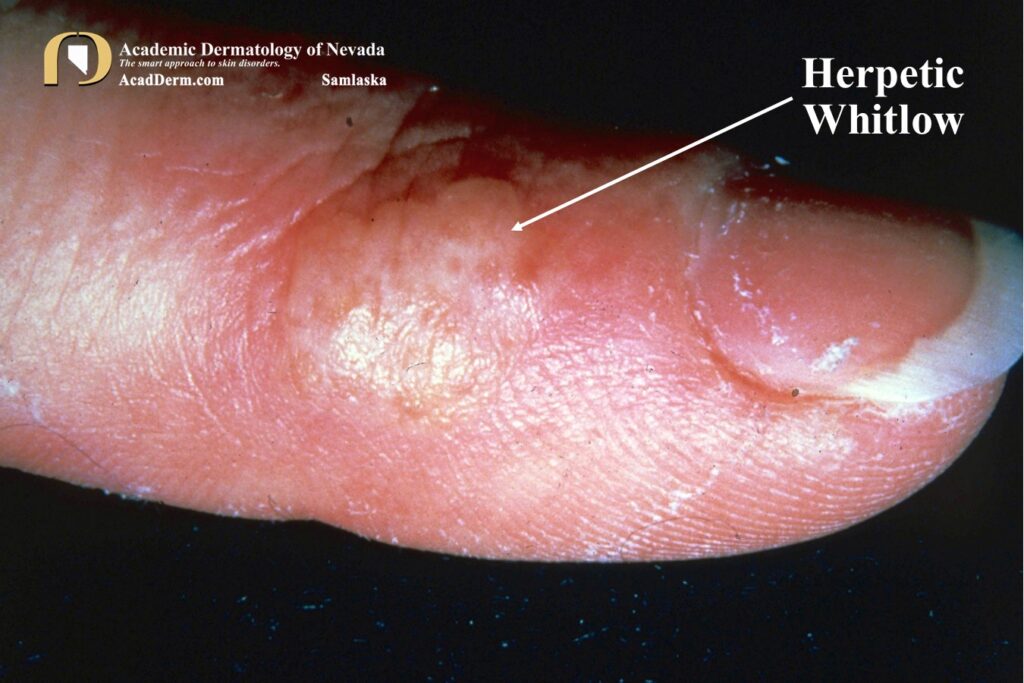
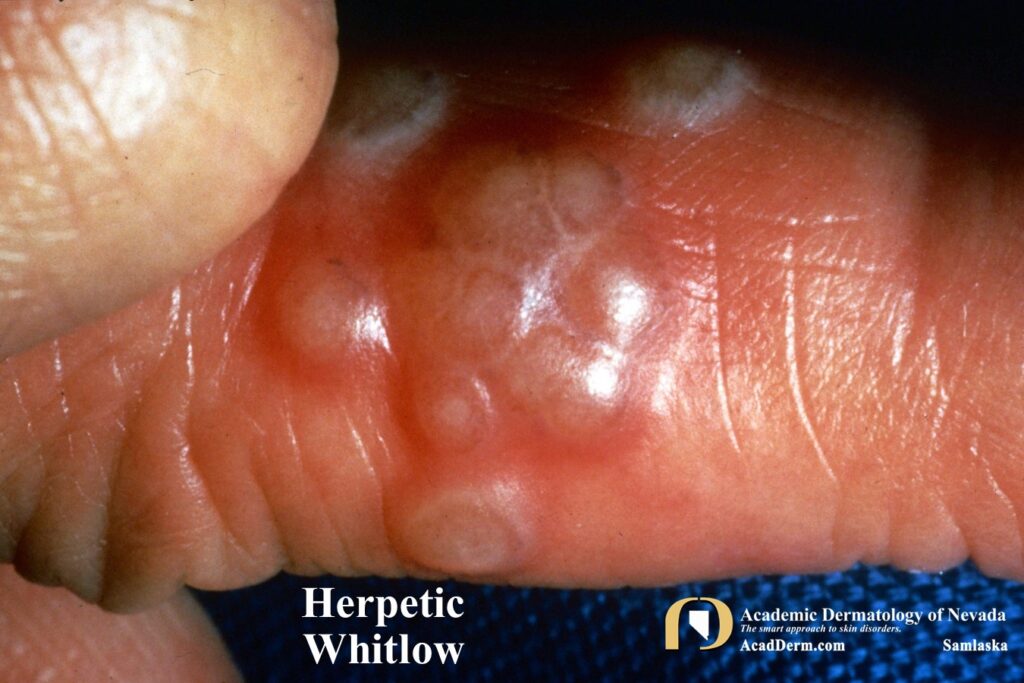
Swelling of the hand may occur, complicated by lymphatic streaking and swelling of the epitrochlear or axillary lymph nodes, mimicking a bacterial cellulitis. HW has become much less common among health care workers due to the virtual universal use of gloves and infection prevention precautions. Children continue to be an issue with oral type 1 herpes of the lip being transmitted to the fingers through oral exposure, such as thumb sucking or nail biting habits.
HW has a bimodal distribution with around 20% of cases occurring in children younger than 10 years of age and 55% of cases in adults between ages of 20 to 40 years. Virtually all cases of children are caused by HSV-1 (herpes simplex virus), often associated with herpetic gingivostomatitis. In adults up to 75% of cases are caused by HSV-2 and twice as common in women. HW in health care workers can be transmitted to patients exposed to ungloved healthcare workers, most commonly in the oropharynx.
Treatment of all herpetic infections involves use of oral medications such as acyclovir (old school), valacyclovir or famciclovir. To read more about HW click HERE, HERE and HERE.